Fashion trends move in cycles of roughly 20–30 years, which is why 80s fashion, 90s fashion, and Y2K/2000s style keep resurfacing today with modern updates. Fashion Nova is best known for trend-fast, size-inclusive fast fashion; Nykaa Fashion and Max Fashion are major South Asian multi-brand retailers; Urbano Fashion focuses on affordable menswear. Becoming a fashion designer typically takes a mix of design education, hands-on sewing/pattern skills, a strong portfolio, and real-world experience through internships before launching independently.
Why Fashion Trends Repeat (The 20-Year Rule)
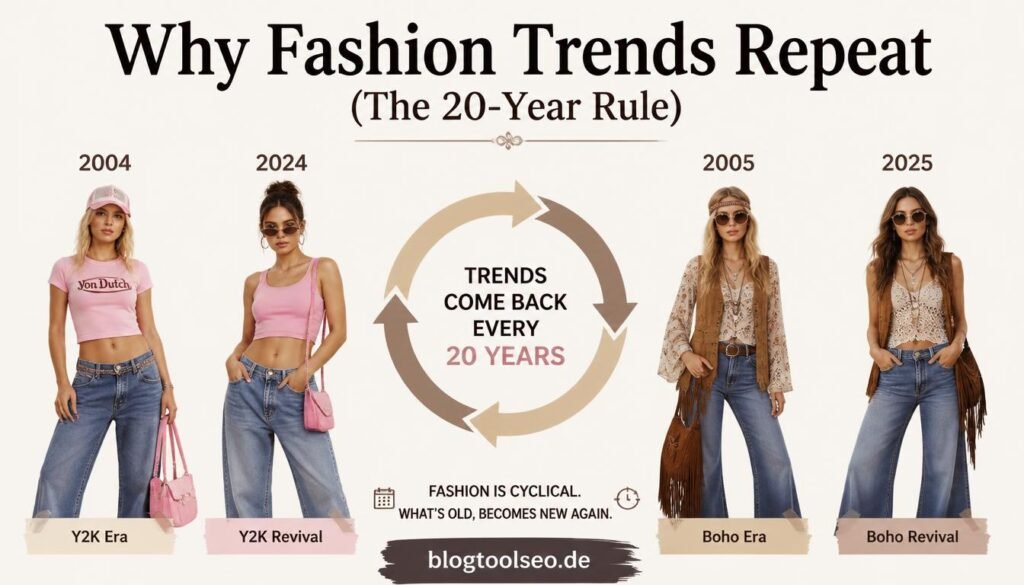
Fashion historians and trend forecasters commonly reference a “20-year rule” — the idea that a decade’s style becomes fashionable again roughly two decades after it first peaked. There are a few practical reasons this keeps happening:
- Generational nostalgia. People tend to romanticize the fashion of their childhood or teenage years once they have spending power in their 20s and 30s. This is a major driver of why millennials pushed 90s revival trends, and why Gen Z is now driving the Y2K comeback.
- Design archives get reopened. Fashion houses and fast-fashion brands both mine old catalogs, ad campaigns, and runway archives for “new” ideas — it’s cheaper and lower-risk than inventing something entirely original.
- Social media compresses the cycle. Platforms like TikTok and Instagram have sped up how fast a trend resurfaces and how fast it fades, so decades now blend into each other faster than they did before smartphones — you’ll see 80s, 90s, and Y2K pieces styled together in the same outfit post.
- Manufacturing catches up to nostalgia. A trend only “returns” at scale once supply chains can mass-produce it affordably — which is part of why fast-fashion retailers play such a big role in reviving decades.
Understanding this cycle is genuinely useful: it means you can often predict the next revival by looking at what was trendy roughly 20–25 years before now, and it explains why your closet from a few years ago might already be “back in style.”
80s Fashion, In Full Detail
The 1980s is one of the most referenced decades in fashion history because almost nothing about it was quiet. It combined maximalist glamour with a rising athletic/casual movement, and it still shows up constantly in runway shows and street style today.
80s Fashion Women
Womenwear in the 80s was defined by structure and boldness:
- Power suits with exaggerated shoulder pads, worn as a visual symbol of authority in newly male-dominated corporate spaces.
- High-waisted denim, often paired with cropped or tucked-in tops.
- Aerobics-driven activewear — leotards, leg warmers, and headbands, fueled by the home-workout-video boom.
- Bold color-blocking and neon, especially in casualwear and swimwear.
- Big hair — permed, teased, and heavily hairsprayed.
80s Mens Fashion
Menswear in the 80s split into two very different lanes:
- Formal/business style: boxy suits, wide lapels, and bold patterned ties.
- Casual/streetwear influence: tracksuits, bomber jackets, and denim jackets, shaped heavily by early hip-hop culture and skate style.
- Leather jackets and acid-wash denim also became a rebellious counter-style to the buttoned-up office look.
80s Mens Hair Fashion
Hair was a genuine fashion statement for men in this decade. The mullet (short on top and sides, long in back) is the most iconic example, alongside permed curls, slicked-back styles with heavy gel, and thicker sideburns or mustaches to complete the look.
80s Fashion Preppy Look
Running alongside the louder trends was a cleaner, campus-inspired “preppy” aesthetic:
- Polo shirts, often worn with the collar popped
- Pastel sweaters tied around the shoulders or waist
- Khaki chinos
- Boat shoes or loafers, frequently worn without socks
This preppy look is arguably the most wearable 80s trend today, since it never leaned into the neon-and-shoulder-pad extremes.
80s Fashion in Pakistan
80s fashion in Pakistan blended global influences with local tailoring traditions. Bell-bottom trousers and fitted kurtas were popular among younger, urban crowds, while structured shalwar kameez in bold prints echoed the West’s love of statement silhouettes, adapted to local fabric choices and cultural norms around modesty. Men’s shirts often featured wide collars, and permed hairstyles for women mirrored the same “big hair” trend seen internationally — just filtered through regional style sensibilities.
80s Fashion Trends Trivia Questions
A fun way to test — or teach — its knowledge:
- Which home-fitness craze made leg warmers a mainstream fashion item?
- What garment feature became the visual symbol of 80s “power dressing”?
- Which men’s hairstyle was short on top and long in back?
- Which color family — pastels, neons, or earth tones — defined 80s activewear?
- What footwear, often worn without socks, defined the preppy look?
These trivia questions work well for classroom fashion-history lessons, retro-themed parties, or short-form video quizzes — decade trivia consistently performs well as engagement content because it invites people to test their own memory.
90s Fashion: The Anti-Trend Trend
If the 80s were about being loud, the 90s were partly a reaction against that — a shift toward grunge, minimalism, and comfort-driven streetwear.
Key pieces from the decade include flannel shirts (borrowed from the grunge music scene), slip dresses worn both dressed up and down, combat boots, baggy jeans and cargo pants, mock turtlenecks, and a “logo mania” phase where brand names became the design itself. Denim-on-denim, once considered a style mistake, is now embraced as an intentional 90s callback.
What makes 90s fashion so easy to wear today is its restraint — muted color palettes and simple silhouettes translate well into modern minimalist wardrobes without looking like a costume.
Y2K & 2000s Fashion: The Current Obsession
2000s fashion — now widely rebranded online as “Y2K fashion” — is arguably the single biggest trend revival happening in fashion right now, driven almost entirely by Gen Z rediscovering early-2000s pop culture through social media, throwback playlists, and reality TV reruns.
Defining pieces include:
- Low-rise jeans, often paired with visible waistbands or belly chains
- Velour tracksuits, popularized by early-2000s celebrity street style
- Metallic and iridescent fabrics
- Mini skirts and baby tees, frequently styled together
- Statement and tinted sunglasses
- Chunky sneakers and platform shoes
- Butterfly motifs, on clips, tops, and accessories
The modern Y2K revival isn’t a pure copy of the original — brands are reworking these silhouettes with more size-inclusive fits, and in some cases, more sustainable fabric choices than the early-2000s originals had.
Decade Comparison Table
| Decade | Signature Silhouette | Color Palette | Iconic Piece | Hair/Beauty Vibe |
|---|---|---|---|---|
| 80s | Structured, exaggerated | Neon + pastel preppy | Shoulder-pad blazer | Big, permed, teased |
| 90s | Loose, minimal | Muted, earthy | Flannel shirt / slip dress | Straight, low-effort |
| 2000s / Y2K | Low-rise, body-conscious | Metallics, bright | Velour tracksuit | Straightened, chunky highlights |
| Now (2020s) | Mixed-era, oversized-meets-fitted | Neutral base + retro accents | Wide-leg trouser + chunky loafer | Natural texture, “clean girl” |
Current Fashion Trends Right Now
it right now sits at the intersection of nostalgia and comfort. The clearest patterns:
- Oversized tailoring — blazers and trousers cut roomy but styled intentionally, not sloppily
- Y2K accessory revival — mini bags, layered jewelry, tinted sunglasses
- “Quiet luxury” basics — plain, high-quality pieces with minimal branding, in contrast to 90s logo-mania
- Chunky, comfort-first footwear — loafers, platform sneakers, and retro trainers
- Archive re-releases — many retailers are literally reprinting old catalog designs under new collection names, which is part of why old decades feel so present in new stores
How to Style a Retro Look That Actually Gets Noticed
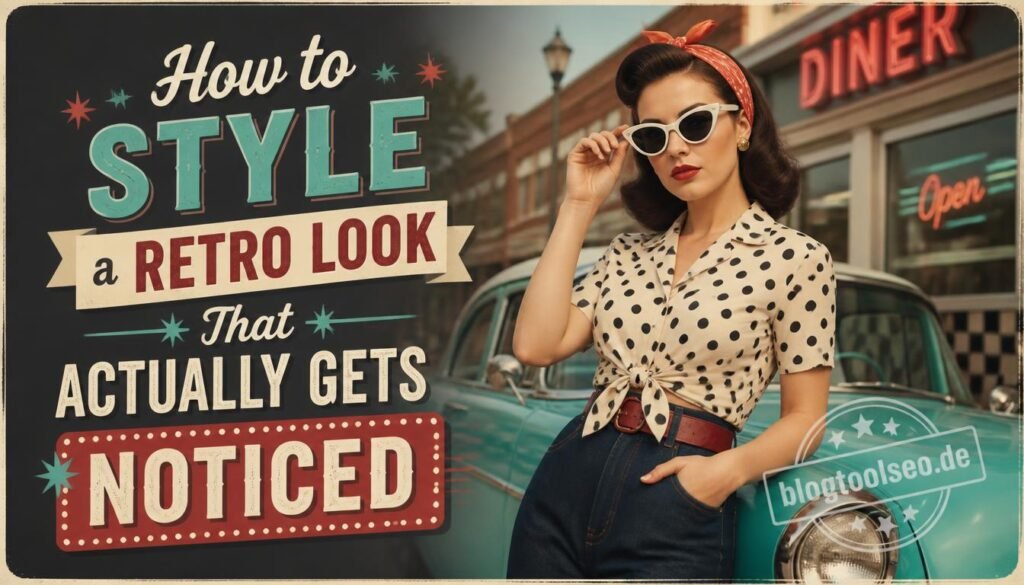
If your goal is to make an 80s (or 90s, or Y2K) outfit stand out — whether for social media, a themed event, or just personal style — a few practical rules make a real difference:
- Commit to one era at a time. Mixing 80s shoulder pads with modern skinny jeans dilutes the look. Pair era-specific pieces with era-appropriate cuts for the strongest visual statement.
- Match hair and makeup to the decade. Clothing alone rarely sells a decade as clearly as hair and makeup do — bold blush and volume for the 80s, muted tones for the 90s, glossy lips and glitter for Y2K.
- Use accurate props and settings. A film-style filter, a retro backdrop, or period-accurate accessories reinforce the theme far more than clothing alone.
- Write a hook, not a caption. Short, interactive captions (“guess the decade,” “rate this fit 1–10”) consistently drive more engagement than a plain description of the outfit.
- Time it around a trend moment. Posting retro content during an active nostalgia trend (a themed hashtag challenge, a decade-anniversary event, a viral throwback sound) significantly increases reach compared to posting it in isolation.
Fashion Brand Guide: Honest Comparisons
Fashion Nova
It is a US-based fast-fashion retailer built around trend-fast releases, body-inclusive sizing, and heavy influencer marketing. It’s a strong option if you want to try a viral trend cheaply and quickly, though — like most fast fashion — pieces are generally lower in durability than mid-range or premium brands.
On Fashion Nova discount codes: codes shared secondhand on coupon sites or social media are frequently expired by the time you try them, since Fashion Nova rotates promotions often. The most reliable way to get a valid discount is directly through their official app, site promotions banner, or email/SMS sign-up offers.
Nykaa Fashion
It is an Indian multi-brand fashion and lifestyle platform, an extension of the beauty retailer Nykaa. It carries a wide range from ethnic wear to Western silhouettes and regularly runs seasonal sales and designer collaborations, making it a solid option for comparison shopping across many brands in one place.
Max Fashion
It is a value-fashion retail chain popular across South Asia and the Middle East, known for affordable family clothing spanning casualwear, ethnic wear, and kidswear, with frequent in-store and online promotions. It’s generally positioned as a budget-friendly, family-oriented option rather than a trend-first retailer.
Urbano Fashion
It is a menswear-focused Indian brand best known for casual and semi-formal shirts, t-shirts, and jackets at accessible prices, typically sold through major e-commerce marketplaces. It’s a reasonable pick for basic wardrobe staples rather than statement or trend pieces.
The Fashion Hub
It is used as a name by multiple independent regional boutiques and online stores, not one single global brand. These typically offer curated seasonal collections or styling services. If you’re trying to find a specific one, confirm the exact store/website first, since the name isn’t tied to one company.
Quick Brand Comparison
| Brand | Best For | Price Range | Style Focus |
|---|---|---|---|
| Fashion Nova | Trend-fast pieces, body-inclusive sizing | Budget–mid | Viral/trend-driven |
| Nykaa Fashion | Multi-brand comparison shopping | Budget–premium | Ethnic + Western mix |
| Max Fashion | Affordable family wardrobe | Budget | Everyday casual |
| Urbano Fashion | Men’s basics | Budget | Casual/semi-formal menswear |
| The Fashion Hub | Regional boutique shopping | Varies | Curated/local |
How to Become a Fashion Designer: A Real Roadmap
Breaking into fashion design generally follows a consistent path, whether you go the formal-education route or teach yourself:
- Build core design skills. Learn sketching (fashion illustration), color theory, fabric types and their behavior, and basic garment construction.
- Get trained — formally or informally. This can mean a diploma or degree at a design institute, or a mix of short courses, YouTube-based learning, and mentorship, depending on your budget and timeline.
- Learn pattern-making and sewing fundamentals. Even designers who don’t sew professionally benefit enormously from understanding how a garment is actually constructed — it changes how realistically you design.
- Build a focused portfolio. A small, well-photographed, cohesive collection (5–10 strong pieces) is more persuasive to employers or clients than a large, inconsistent one.
- Intern or assist an established designer. This is where you learn the business side that most courses skip — sourcing fabric, managing production timelines, and dealing with clients or buyers.
- Launch small and scale gradually. Start with a capsule collection, freelance styling, or made-to-order pieces before committing to a full label with regular seasonal drops.
- Learn the business side early. Pricing, sourcing, and basic marketing matter as much as design talent for anyone planning to run their own label rather than work under an existing brand.
Fashion Designer Course Fees: What to Actually Expect
Course fees for fashion design vary enormously depending on:
- Course length — a few-week certificate course costs far less than a multi-year diploma or degree.
- Institute reputation — well-known design schools generally charge significantly more than lesser-known local institutes.
- Country/region — tuition costs differ widely between countries and even between cities within the same country.
- Format — online self-paced courses are typically the cheapest option; in-person, studio-based programs with hands-on equipment access cost more.
Because these numbers change frequently and vary so much by institution, the most reliable step is shortlisting 3–4 design schools in your target city or country and requesting their current fee structure directly, rather than relying on a single quoted figure that may be outdated.
FAQs About Fashion
What is a style number in fashion?
A style number is a unique code that a brand or manufacturer assigns to a specific garment design. It’s used to track that exact style through production, inventory, sizing, and sales, so that when a store reorders stock or a customer asks about a piece, everyone in the supply chain — designer, manufacturer, retailer, and customer service — is referencing the exact same item.
Did you know fashion facts?
Fashion history has more surprising turns than most people expect: Blue jeans were originally designed as durable workwear for miners in the 1800s, not as an everyday fashion item. High heels were first worn by men — specifically Persian cavalry soldiers — to help secure their feet in stirrups while riding. The little black dress only became a wardrobe staple after being popularized in the 1920s as a practical, versatile alternative to elaborate formalwear. Zippers existed for decades before designers widely adopted them in clothing, since early versions were considered unreliable for garments.
How to become a fashion designer?
Start by building core skills in sketching, fabric knowledge, and garment construction. Pursue formal design education or structured self-directed learning, build a small and cohesive portfolio, gain real-world experience through internships or assisting an established designer, and launch your own designs on a small scale before scaling into a full label.
How to make an 80s fashion look go viral nowadays?
Commit fully to one decade’s silhouette instead of blending eras, match hair and makeup to the same period, shoot with a retro-style filter or setting, and pair the outfit with a short, interactive caption. Posting during an active nostalgia trend or themed challenge also significantly increases visibility.
What’s the difference between 90s fashion and Y2K fashion?
90s fashion leaned grunge and minimalist — flannel, slip dresses, and muted tones. Y2K (2000s) fashion was more maximalist and futuristic — low-rise jeans, metallics, velour tracksuits, and bold accessories. The two are often confused online because they sit right next to each other chronologically, but their visual identity is quite different.
Are Fashion Nova discount codes always valid?
No. Codes circulated on third-party coupon sites or social media frequently expire or are region-restricted by the time you try them. The most reliable source for a valid, current code is Fashion Nova’s own app, website promotions banner, or email/SMS sign-up offer.
What is a style number used for besides inventory?
Beyond inventory tracking, style numbers help with quality control (tracing a defect back to a specific production batch), reordering, and cross-referencing a product across multiple sales channels — physical stores, e-commerce, and wholesale — where the product name might be displayed differently but the style number stays constant.
Why does 80s fashion look different in Pakistan compared to the West?
Because it was adapted through local tailoring traditions and cultural norms. Structured silhouettes and bold prints translated into shalwar kameez and fitted kurtas rather than Western dresses and suits, while still reflecting the same era-wide love of statement shapes and bold color.
How can I make viral 80s fashion images for free?
You can make viral-style 80s fashion images for free with AI image generators such as Leonardo AI and Microsoft Designer. Start with a specific prompt describing the 1980s fashion style you want, including clothing, hairstyles, colors, accessories, setting, lighting, and photography style. For example, you can request oversized denim jackets, high-waisted jeans, bold colors, retro sportswear, leather jackets, or 80s power suits combined with vintage film photography. Generate several variations and choose the image with the strongest composition and most authentic retro styling. For social media, vertical images usually work well, while 16:9 images are suitable for blog articles and featured images.
How long does it take to become a fashion designer?
There’s no fixed timeline, but a common path looks like: 1–4 years of formal or self-directed training, followed by 1–3 years of internships or assisting, before most designers feel ready to launch independently. Some skip formal education entirely and build skills through apprenticeship-style work, which can shorten or lengthen the timeline depending on opportunity and consistency.
This guide is intended as general style, shopping, and career information based on widely documented fashion history and industry practices. Discount codes, retailer promotions, and course fees change frequently — always confirm current details directly with the relevant retailer or institute before making a purchase or enrollment decision.